
Designing With Emotion

How Mood, Memory, and Sensory Response Shape Interior Environments
Design is often described in visual language — color, form, style, shape, proportion. But the most memorable interiors are never defined by what they look like. They are defined by what they make you feel. The heartbeat of a room is emotional, not visual. It is the response that rises in the body before the eye even registers its details — the quiet calm, the sense of belonging, the softness, the warmth, the memory it awakens, or the stillness it creates.

In truth, every space is an emotional environment. The materials, the light, the air, the texture, the rhythm — all of these are architects of feeling. When design is done well, emotion becomes the invisible structure holding everything together.
This is the design philosophy that defines InterLux Interiors: spaces are not just formed — they are felt. Emotion is not an afterthought of design. Emotion is design.
Modern luxury has shifted. It is no longer defined by the price of materials or the size of a home, but by how deeply the space supports the human experience. Clients no longer want rooms that simply look beautiful; they want rooms that nurture, heal, energize, soothe, and inspire. They want homes that feel like refuge, memory, ritual, and identity.
Interior design in 2026 is not about aesthetics alone. It is about emotional precision — the deliberate shaping of mood, sensory response, and psychological comfort.
This is the art of designing with emotion.
EMOTION IS THE FIRST IMPRESSION OF ANY ROOM

Before you see a room, you feel it. The nervous system reacts before the mind interprets.
This happens in less than one second.
Warm tones soften the body. Cool tones sharpen focus. Soft textures relax the breath. Glossy surfaces increase alertness. Dim light calms. Harsh light energizes. Symmetry soothes. Clutter agitates.
These reactions are instinctual. They are rooted in biology, psychology, and sensory perception — not in conscious analysis. A room can be objectively beautiful yet feel emotionally cold. Another can be visually simple yet emotionally magnetic.
InterLux Interiors designs for this immediate, subconscious reaction. Their spaces feel warm, grounded, atmospheric, and composed because every element — material, form, proportion, light — works in harmony to support emotional resonance.
The first impression of a room is emotional. The visual understanding comes second.
MOOD IS A DESIGN MATERIAL

Mood is not something that happens accidentally in a room. It is crafted with the same intention as lighting, texture, materials, and architecture. To design with emotion means to treat mood as a material — something that must be shaped, curated, and refined.
The question is no longer “How should this room look?” The real question is: “How should this room feel?”
Warm. Grounded. Intimate. Expansive. Quiet. Alive. Still. Energized. Soft. Bold. Mood defines the atmosphere; the designer shapes it.
InterLux Interiors begins every project with these emotional questions long before selecting colors or furnishings. Is this a room meant for morning light? For evening softness? For conversation? For solitude? For movement? For stillness?
Emotion becomes the design brief. Materiality becomes the vocabulary. Atmosphere becomes the result.
MEMORY — THE MOST POWERFUL EMOTIONAL TRIGGER IN DESIGN
Rooms hold memory — both old and new. The scent of wood triggers nostalgia. The softness of linen recalls home. Plaster walls evoke ancestral calm. Dim light evokes intimacy. Stone surfaces remind the body of permanence.

Design becomes more powerful when it honors emotional memory — the subtle familiarity a material carries, the echoes of past experiences embedded in the sensory environment.
InterLux Interiors understands how materials evoke memory. Their use of natural, atmospheric, warm textures creates spaces that feel instantly grounded, familiar, timeless. Even in modern architecture, there is a sense of history, of story, of belonging.
Memory is an emotional design tool — one that creates deep connection between person and place.
THE SENSORY DIMENSION OF INTERIOR DESIGN — WHERE EMOTION LIVES
Emotion is stored in the senses. To design with emotion, one must design with sensory intelligence.
Touch
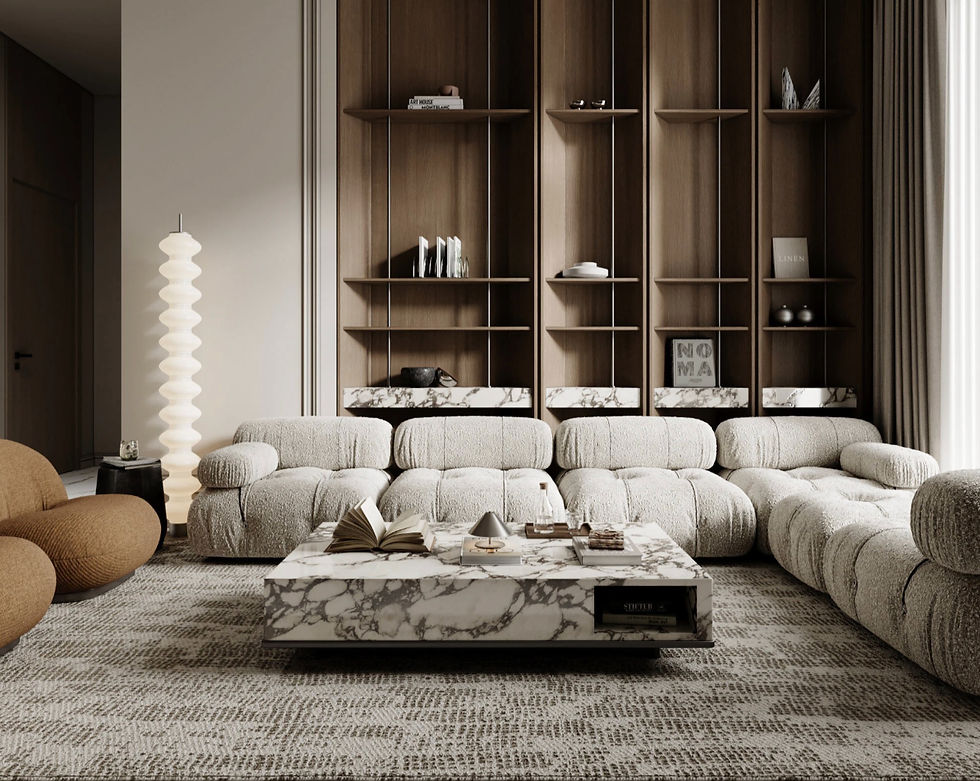
Soft textures calm the nervous system. Honed stone warms over time. Smooth wood feels human. Bouclé softens edges.
The way a space touches the skin affects how it affects the soul.
Light
Warm light slows the mind. Soft shadows create intimacy. Layered illumination creates mood.
Light is emotional atmosphere made visible.
Sound
Thick textiles soften noise. Plaster absorbs echo. Curves improve acoustics.
Silence can be luxury.
Space
Breathing room creates clarity. Symmetry creates calm. Curvature slows the pace.
The body interprets spatial harmony long before the brain understands it.
Scent
Wood, linen, earth, stone — they all create micro-signals of comfort and grounding.
InterLux Interiors designs with all five senses, not just the visual field. Their interiors feel complete because every sensory detail has been addressed — even the emotional silence of negative space.
This is where design becomes immersive, not decorative.
THE POWER OF COLOR TEMPERATURE — A MOOD ARCHITECT

Color has temperature, and temperature has emotion. Warm tones evoke calm. Cool tones evoke clarity. Deep tones evoke intimacy. Light tones evoke openness.
But in emotional design, it is not the color itself that matters — it is the feeling behind the color.
InterLux Interiors uses color as emotional temperature control. They choose tonal palettes that soothe, anchor, or uplift depending on the room’s purpose. Their homes feel harmonious because the colors speak the same emotional language, even when their tones vary.
Color is emotional architecture.
TEXTURE — THE LANGUAGE OF HUMAN COMFORT

Humans crave texture — not for aesthetic pleasure, but for emotional grounding. Texture is our primal connection to the physical world.
Rough textures anchor. Soft textures soothe. Matte textures quiet. Glossy textures energize.
Texture is how a space communicates emotionally without speaking. InterLux Interiors designs texture like poetry — layering materials so the room feels deep, warm, and alive.
Texture is emotion made tangible.
LIGHT — THE FIRST EMOTIONAL IMPRESSION OF A ROOM
Light is not functional — it is emotional. It determines how a room feels before anything else is noticed.
Warm light slows the breath. Dimmed light calms. Soft light opens the heart. Shadow adds mystery and depth. Even daylight has emotional phases.
InterLux Interiors choreographs light like atmosphere — layering it, warming it, softening it. Their rooms glow rather than glare. Light becomes the emotional pulse of the home.
Light is emotion before it is illumination.
SPACE — THE EMOTIONAL ARCHITECTURE OF CALM

Spacing, proportion, nearness, and distance shape our emotional reaction to a room. The mind needs room to rest. The body needs room to move. When space is harmonious, emotion follows.
Too much furniture creates anxiety. Too little creates sterility. Perfect spacing creates flow, comfort, and calm.
InterLux Interiors understands that luxury lives in the distance between objects — the breathing room, the pauses, the invisible architecture.
Space is emotional clarity.
THE ROLE OF FORM — SHAPE AS PSYCHOLOGY

Shapes carry emotional meaning. Curves soften and invite. Angular lines sharpen and energize. Organic forms feel humane. Rigid geometric forms feel structured.
InterLux Interiors uses form to shape emotional atmosphere. Their use of soft-edge furniture, sculptural pieces, and fluid silhouettes creates interiors that feel gentle and calm without losing structure or sophistication.
Form is emotional choreography.
FURNITURE AS EMOTIONAL ARCHITECTURE
The way furniture is placed affects the way we feel inside a room.A circular arrangement feels communal. A linear arrangement feels formal. A curved sofa softens a space. A pair of chairs creates intimacy.
InterLux Interiors designs furniture layouts that respond to emotional function — creating spaces that encourage conversation, rest, movement, or stillness.
Furniture shapes emotion through position, scale, and silhouette.
EDITING — THE EMOTIONAL LUXURY OF LESS

Emotion is amplified by clarity. Removing unnecessary pieces creates clean mental space. Refinement creates emotional quiet. Editing fosters calm.
InterLux Interiors approaches interiors as refined curation, not accumulation. Every piece has a purpose. Nothing distracts. Nothing competes. This restraint is what creates emotional luxury.
Less is not minimalism — less is emotional precision.
WHY DESIGNING WITH EMOTION IS THE FUTURE OF LUXURY
The world has shifted. People want more than beauty. They want connection. They want sensory richness. They want meaning. They want refuge from the speed of life. They want homes that feel like extensions of themselves.
Designing with emotion is not a trend — it is the new standard of high-end interior design. Spaces must support mental well-being, regulate emotional energy, and create long-lasting sensory harmony.
InterLux Interiors leads this philosophy with rare sensitivity. Their interiors do not simply function or impress — they envelop, comfort, resonate, and linger.
Emotion is the new luxury. Feeling is the new status symbol. Atmosphere is the new aesthetic.
SPACES ARE NOT SEEN, THEY ARE FELT
Emotion is the invisible architecture of every great interior. It shapes how we experience space, how we remember it, how we live in it.
InterLux Interiors designs with emotional intelligence — creating homes that whisper, comfort, ground, and inspire. Theirs is a design philosophy rooted not in trends but in timeless human experience. Their rooms feel alive, not because they are filled with objects, but because they are composed with deep emotional intention.
A beautiful room pleases the eye. An emotional room transforms the soul.
This is the difference. This is the future. This is InterLux Interiors.


Comments